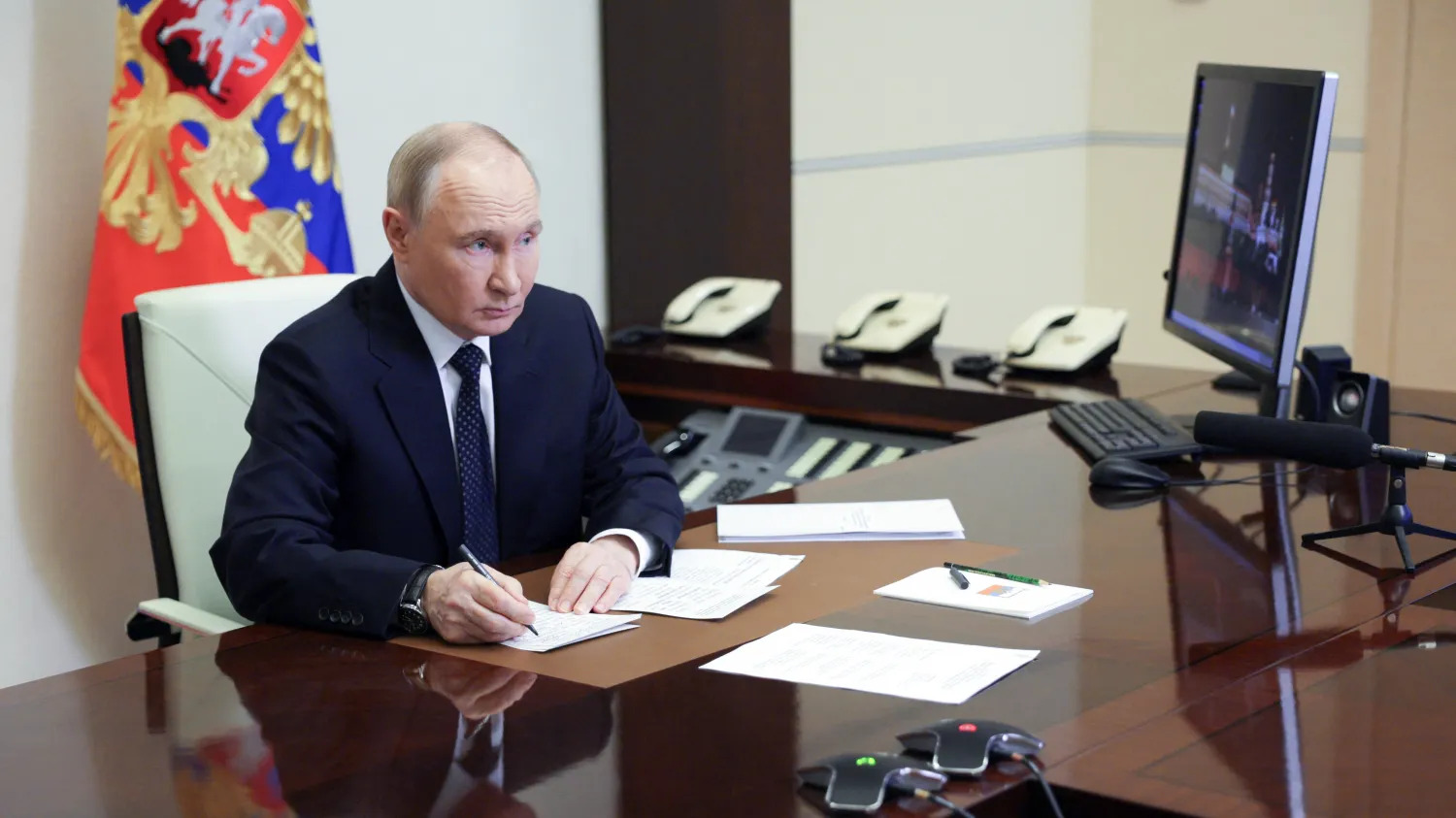
普京总统是个习惯用纸笔的人。他没有智能手机,也很少上网。当英国白厅的部长们通过WhatsApp协调政策时,克里姆林宫的掌权者却通过办公桌上一排加密的固定电话线路来治理俄罗斯。
在这样一个科技恐惧症患者的领导下,俄罗斯在人工智能发展竞赛中落后于竞争对手也就不足为奇了。
斯坦福大学11月发布的一项研究对36个国家的人工智能产业整体实力进行了排名。俄罗斯排名第28位,落后于所有主要世界经济体。
美国、中国和印度——莫斯科一直视之为地缘政治伙伴的国家——分别位列第一、第二和第三。就连卢森堡、比利时和爱尔兰这样的小国排名都高于俄罗斯。
该排名综合考虑了各国的研发投入以及人才储备。按市值计算,俄罗斯没有一家公司跻身全球前100强科技公司之列。俄罗斯的任何一所大学都未能跻身全球人工智能研究机构排名前200,更遑论前100。
俄罗斯落后到何种程度,在11月莫斯科举行的一场科技活动中显露无疑。该国首个人工智能人形机器人亮相,却在踉跄登台后便摔了个狗啃泥。
这种尴尬与苏联时代的成就形成了鲜明对比。从列宁20世纪20年代初的电气化计划,到尤里·加加林开创性的太空飞行,技术进步一直是苏联建设的重要组成部分,是实现快速工业化和赢得冷战竞争的关键手段。
苏联更重视工程和数学等学科的研究,而非更容易滋生异议的人文学科。
时至今日,俄罗斯大学生仍然经常在国际大学生程序设计竞赛中拔得头筹。国际大学生程序设计竞赛是一项年度赛事,汇聚了来自世界各地的计算机科学家团队。
尽管苏联领导人能够看到卫星或核武库的益处,但普京似乎将21世纪的数字创新视为对其权威的挑战,他甚至曾将互联网描述为“中央情报局的项目”。
在他执政期间,俄罗斯人能够访问的互联网范围逐渐缩小。Instagram、YouTube、脸书和X现在都被禁用。
或许是受到伊朗在反政府抗议活动日益高涨时切断互联网的启发,克里姆林宫本周提议进一步扩大俄罗斯联邦安全局的权力,使其能够随意关闭几乎所有形式的通信。
“在俄罗斯,互联网的使用正变成一种奢侈品,”俄罗斯经济学家、欧洲分析与战略中心联合创始人弗拉迪斯拉夫·伊诺泽姆采夫表示,“政府正在培育一种实际上非常强烈地反对(数字领域的)技术进步文化。”
“人工智能技术以及一般的高科技都需要大量的独立创业公司和良好的投资环境。
“但在俄罗斯,企业不敢投资新技术。因为如果投资失败,而你又有国家支持,你最终可能会被指控犯有不当行为——贿赂、挪用公款等等。”
即使这项投资最终获得回报,也存在着技术冒犯克里姆林宫的风险。
俄罗斯版的聊天机器人Alice(目前也无法使用)曾因拒绝回答有关乌克兰境内纪念斯捷潘·班杰拉(这位极右翼民族主义者曾领导反抗苏联军队的叛乱分子)纪念碑的问题而被前总统德米特里·梅德韦杰夫斥为懦夫。
俄罗斯最大的搜索引擎所有者、Alice的开发者Yandex显然认为,对于任何被认为具有政治争议的问题,采取回避的态度更为稳妥。
当《泰晤士报》向Alice提问:“卢甘斯克(位于俄罗斯占领的顿巴斯地区乌克兰城市)位于哪个国家?”时,她最初回答说卢甘斯克在乌克兰,但很快又改口说:“我不了解这个问题,所以不予回答。”
然而,该政权非常乐于在他们认为有用的领域利用人工智能的力量。
俄罗斯和乌克兰军队正迅速朝着可靠的完全自主化目标迈进,即机器人能够选择并攻击目标的阶段。
莫斯科还部署了图像生成人工智能技术,用于制作深度伪造视频以进行宣传,其中包括显示乌克兰士兵在前线哭泣投降的视频。
但俄罗斯从人工智能在军事行动中获得的任何好处,都被战争对其更广泛的人工智能产业造成的负面影响所抵消。
仅在2022年,估计就有10万名IT专家离开俄罗斯,占该国科技从业人员的10%。制裁使得获取零部件变得更加困难。
去年,自由欧洲电台报道称,俄罗斯国有金融服务巨头俄罗斯联邦储蓄银行自2022年入侵乌克兰以来,仅采购了9000个图形处理器(GPU),而GPU是人工智能技术的关键组件。相比之下,微软仅在2024年就采购了近50万个GPU。
如果人工智能要像人们期待的那样,给世界经济带来变革,那么从长远来看,俄罗斯可能会更加依赖其盟友中国。
伊诺泽姆采夫表示,短期内,这对普京来说无关紧要,他最关心的是俄罗斯的地缘政治地位和自身的政治稳定。
他说,“我的感觉是,普京并不想发展经济,他只是想掌控经济。”
President Putin is a pen and paper man. He does not own a smartphone. He rarely uses the internet. While British ministers in Whitehall co-ordinate policy over WhatsApp, the master of the Kremlin governs Russia through a bank of encrypted landlines on his desk.
Led by such a technophobe, is it any wonder that Russia is falling behind its rivals in the race to develop artificial intelligence?
A study released in November by Stanford University ranked 36 countries on the overall strength of their AI industries. Russia came 28th, behind every major world economy.
The United States, China and India — countries that Moscow would like to think of as its geopolitical peers — were ranked first, second and third. But even smaller countries likeLuxembourg, Belgium and Ireland were placed higher on the list.
The ranking takes into account each country’s research and development investment as well as the depth of its talent pool. Russia has no companies in the top 100 technology firms in the world by market capitalisation. Nor do any of its universities appear in the top 200 of globally ranked artificial intelligence research institutions, let alone the top 100.
Quite how far Russia has fallen behind was indicated in November at a tech event in Moscow. The country’s first AI humanoid robot was unveiled, only to fall flat on its face moments after it staggered onto the stage.
Such embarrassments contrast with the achievements of the Soviet era. From Lenin’s electrification programme of the early 1920s to Yuri Gagarin’s pioneering journey into orbit, technological advancement was an integral part of the Soviet project, a means to rapid industrialisation and successful Cold War competition.
Greater emphasis was placed on the study of disciplines such as engineering and mathematics, rather than liberal arts subjects that were more likely to breed dissent.
To this day, Russian university students regularly come first in the International Collegiate Programming Contest, an annual competition that pits teams of computer scientists from around the world against one another.
While Soviet leaders could see the benefit of satellites or a nuclear arsenal, Putin seems to view 21st-century digital innovation as a challenge to his authority, and once described the internet as a “CIA project”.
Over the course of his leadership, the extent of the internet accessible to Russians has slowly dwindled. Instagram, YouTube, Facebook and X are all now banned.
Possibly inspired by Iran’s internet blackout as anti-regime protests grew, this week the Kremlin proposed further legislation to expand the powers of the FSB, the security agency, allowing it to shut down almost all forms of communication at a whim.
“Internet use in Russia is becoming a kind of luxury,” Vladislav Inozemtsev, a Russian economist and co-founder of the Centre for Analysis and Strategies in Europe, said. “The government is nurturing a culture which is actually very aggressively opposed to technological advance [in the digital space].”
“AI technology and high-tech technologies in general require a lot of independent start-ups and a good investment climate.
“But in Russia, companies are afraid of investing in new technologies. Because if your investment fails, and you’ve had state backing, you might end up being accused of wrongdoing — bribery, embezzlement, etc.”
Even if that investment does pay off, there is the risk that the resulting technology will offend the Kremlin.
Alice, Russia’s answer to Chat GPT — which is also unavailable — was branded a coward by Dmitri Medvedev, the former president, for refusing to answer a question about monuments in Ukraine to Stepan Bandera, the far-right nationalist who led an insurgency against Soviet forces.
Yandex, the owner of Russia’s biggest search engine and creator of Alice, has evidently decided it is safer to stonewall on any issue deemed politically contentious.
When The Times asked Alice: “In which country is Luhansk [a Ukrainian city in Russian-occupied Donbas] located?” she initially responded that Luhansk was in Ukraine before quickly modulating her response to: “I won’t answer the question as I don’t know much about it.”
The regime has, however, been more than happy to harness the power of AI in areas where it is deemed to be useful.
The Russian and Ukrainian armies are rapidly advancing towards the goal of reliable full autonomy, the stage at which a robot is capable of choosing and attacking someone or something.
Moscow has also deployed image-generating AI to create deepfakes for propaganda purposes, including videos purportedly showing crying Ukrainian soldiers surrendering at the front.
But any benefit Russia may be getting from AI in its military campaign is outweighed by the war’s detrimental effect on its wider AI industry.
In 2022 alone, an estimated 100,000 IT specialists left the country, amounting to 10 per cent of the tech workforce. Sanctions have made acquiring components far more difficult.
Last year, Radio Free Europe reported that Sberbank, the state-owned financial services giant, has only been able to procure 9,000 graphics processing units — the critical ingredient for AI-powered technologies — since the 2022 invasion of Ukraine. Microsoft bought almost 500,000 in 2024 alone.
If AI is to bring the transformation to the world economy that has long been anticipated, Russia risks even greater dependence on its ally China in the long run.
In the short term, this matters little to Putin, whose primary concerns are centred around Russia’s geopolitical standing and his own political stability, said Inozemtsev.
“My feeling is that Putin does not want to develop the economy, he just wants to own it,” he said.
评论列表